
By Aondoaseer Zendesha
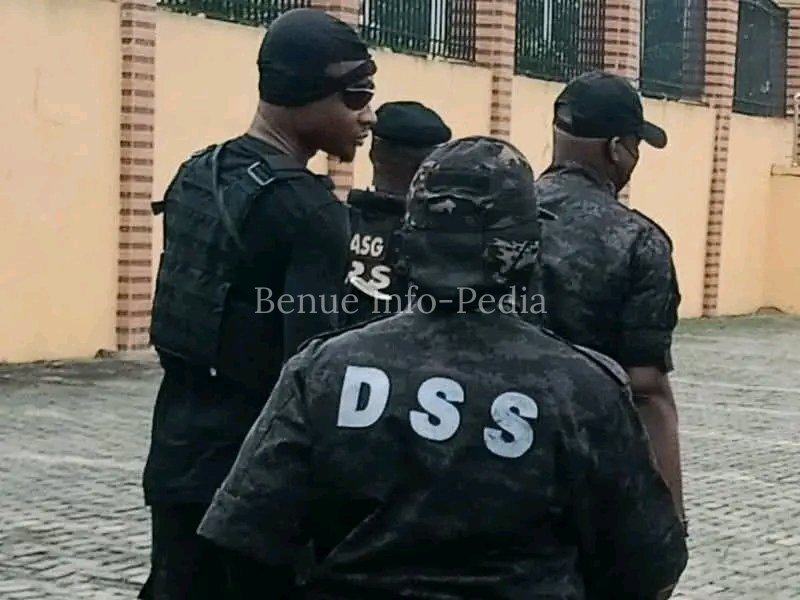
The Federal High Court in Abuja has heard testimony from a Department of State Services (DSS) operative alleging that a Benue community youth leader, Silas Oloche, mobilised ammunition following recurring attacks in Agatu Local Government Area of Benue State.
The allegations emerged during Oloche’s trial over charges relating to unlawful possession of firearms and ammunition, while the defence challenged the admissibility of his alleged statement.
The Federal High Court in Abuja heard on Tuesday how Silas Oloche, identified as a community youth leader from Agatu Local Government Area of Benue State, allegedly procured ammunition intended for retaliation following recurring insecurity in the area.
Oloche is facing six-count charges bordering on alleged unlawful possession of firearms and ammunition.
At the commencement of proceedings, a Department of State Services (DSS) operative identified by the codename “XX” testified as the prosecution’s first witness.
According to the witness, Oloche was arrested on August 2, 2025, in Ogbasi, Agatu LGA, allegedly in possession of 18 hand grenades, 683 rounds of 7.62 x 39mm ammunition, 62 rounds of 7.62 x 51mm ammunition and 136 live rounds of shotgun ammunition.
The witness told the court that the defendant was later transferred from the Benue State DSS command to the agency’s national headquarters in Abuja for further investigation.
The operative further stated that Oloche was interviewed in the presence of a Legal Aid counsel and reportedly admitted purchasing the ammunition from an individual identified as “Chocho” for over N2 million.
According to the prosecution witness, the defendant consented to having his statement written on his behalf because he allegedly could not write.
The court admitted the investigation report, recovered ammunition, grenades, video recordings and the defendant’s written statement into evidence.
During playback of the recorded interrogation in open court, Oloche reportedly narrated years of attacks affecting Agatu communities and traced the crisis to recurring violence allegedly linked to armed herders since 2013.
In the video shown before the court, he reportedly identified himself as the youth leader of Agatu and recounted meetings involving government officials, traditional rulers, security agencies and Fulani representatives from Benue, Kogi and Nasarawa states aimed at addressing the conflict.
He allegedly stated that agreements reached during the engagements were not fully implemented while destruction of farmlands continued.
According to the video evidence tendered by the prosecution, Oloche reportedly admitted mobilising support and funds to acquire ammunition after receiving information suggesting possible confrontations.
He allegedly stated that the ammunition was stored in his residence and that firearms had not yet been acquired before security operatives arrested him.
The defendant also reportedly told investigators that displaced persons and grieving families contributed funds after attacks on communities.
However, defence counsel Noah Imoni objected to the admissibility of the extra-judicial statement, arguing that it was not voluntarily obtained.
The defence alleged that Oloche was beaten, tortured and traumatised during interrogation and questioned the role of the Legal Aid counsel present during the interview.
The prosecution subsequently urged the court to conduct a trial-within-trial to determine whether the statement was voluntarily made.
Presiding judge, Justice Joyce Abdumaliki, granted the request and ordered the separate proceeding.
The defence also sought variation of the defendant’s bail conditions, arguing that the requirement for two Abuja-based sureties with developed properties within the Federal Capital Territory was excessive.
The prosecution opposed the application, citing the seriousness of the allegations and evidence before the court.
The court reserved ruling on the bail variation request and fixed July 8 for commencement of the trial-within-trial and continuation of proceedings.
The allegations remain before the court and have not been judicially determined.
DSS Witness Alleges Benue Youth Leader Stockpiled Grenades, Ammunition Over Planned Agatu Retaliation
A DSS witness told the Federal High Court in Abuja that a Benue youth leader allegedly acquired grenades and ammunition linked to a planned retaliation in Agatu. The defence disputed the voluntariness of the defendant’s statement.

Comments
Join the Discussion
No comments yet. Be the first to share your thoughts!
Sign in to join the conversation.