
By Dan Zendesha
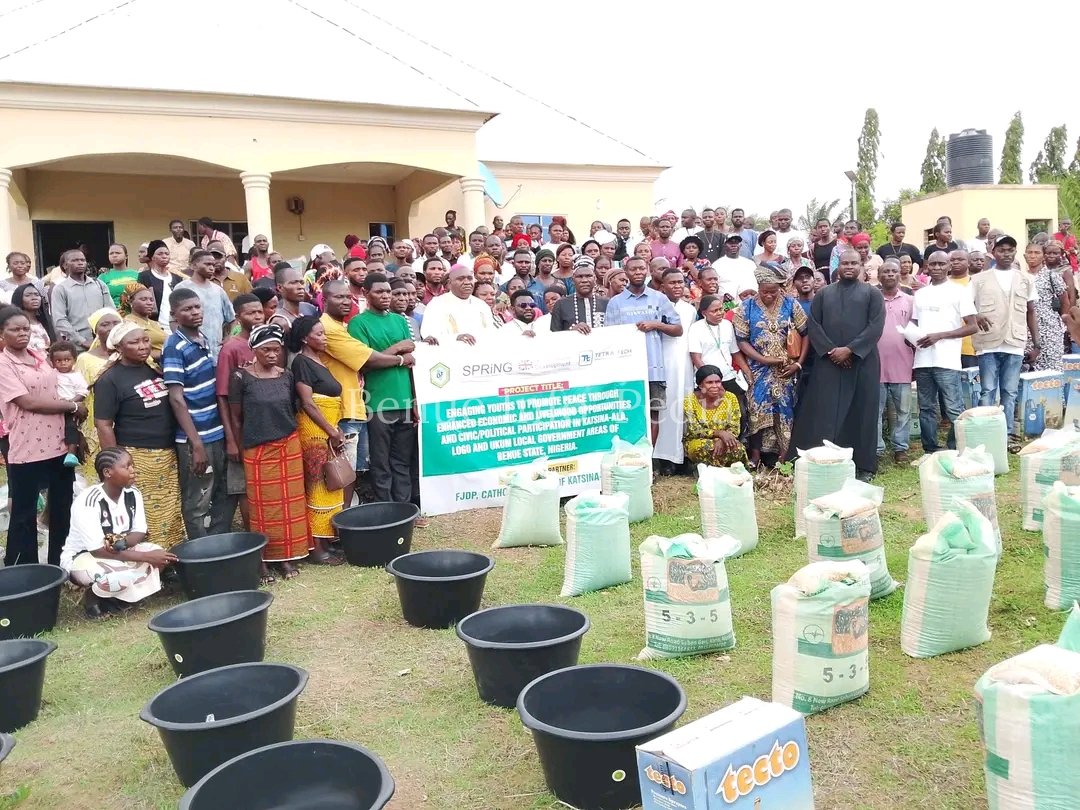
The Catholic Diocese of Katsina-Ala has launched an empowerment programme targeting 150 beneficiaries, including farmers and reportedly repentant bandits, across parts of Benue State.
The initiative is aimed at reducing insecurity by providing sustainable livelihoods and reintegrating individuals into productive economic activities.
In a bid to address rising insecurity through non-violent means, the Catholic Diocese of Katsina-Ala has implemented an empowerment initiative focused on economic inclusion and rehabilitation.
Speaking to ACI Africa on the sidelines of the programme, Bishop Isaac Bundepuun Dugu said the intervention targets both vulnerable farmers and individuals who had reportedly been involved in criminal activities but have now renounced violence.
According to him, the programme is designed to offer participants a viable alternative to crime by equipping them with tools for sustainable livelihoods.
“We are empowering farmers to provide an alternative to crime and violence. Some of the beneficiaries were repentant bandits. They cannot go back to the bush anymore because of the support they have received,” he said.
The initiative is being implemented in partnership with the Foundation for Justice Development and Peace Commission and the UK-supported SPRING Project.
Beneficiaries reportedly received improved seeds, fertilisers, seedlings, livestock, farming tools, and vocational start-up kits for small-scale enterprises such as soap and petroleum jelly production.
The 150 beneficiaries were selected from the Sankara axis, covering Katsina-Ala, Ukum, and Logo areas that have experienced recurring cases of banditry and communal violence.
Bishop Dugu noted that economic empowerment remains a critical strategy in addressing insecurity, particularly in communities affected by poverty and unemployment.
He added that beyond improving security outcomes, the initiative is expected to contribute to food production and enhance the dignity of beneficiaries by reducing dependence and begging.
“When people are empowered, they can feed their families, pay school fees, and access healthcare. This restores dignity and strengthens communities,” he said.
The Diocese reportedly worked with community leaders and traditional institutions to identify beneficiaries, with an emphasis on fairness and reaching the most vulnerable.
Bishop Dugu also called on government agencies and other organisations to replicate similar interventions, urging transparency and accountability in the distribution of empowerment resources.
BENUE DIOCESE EMPOWERS 15O FARMERS, REPENTANT BANDITS TO TACKLE INSECURITY
The Catholic Diocese of Katsina-Ala has empowered 150 individuals, including repentant bandits, with farming tools and vocational kits to promote livelihoods and reduce insecurity in parts of Benue State.
Comments
Join the Discussion
No comments yet. Be the first to share your thoughts!
Sign in to join the conversation.