
By Comr. Israel Joe
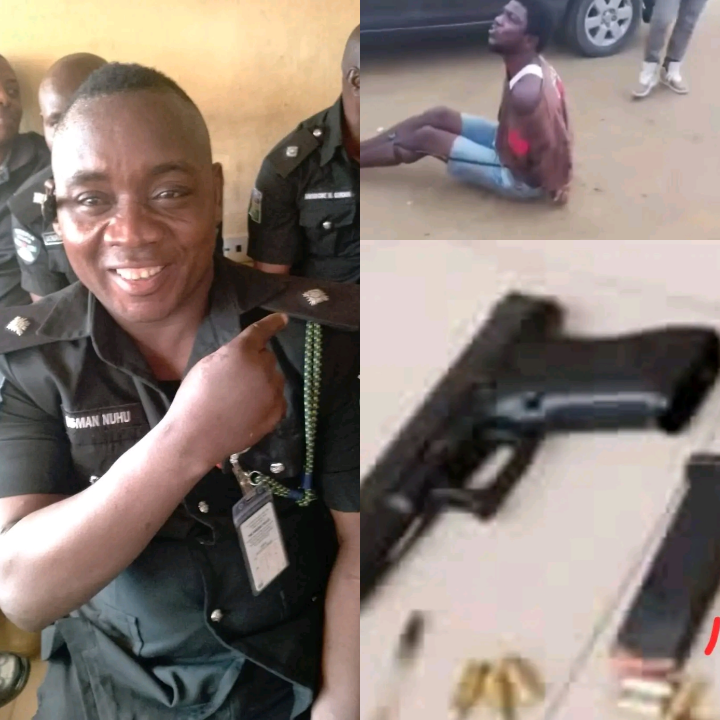
On a busy afternoon at Effurun main park along Sapele Road, life moved as it always does conductors shouting destinations, engines idling, passengers bargaining fares. In the middle of that familiar chaos, 28-year-old Ogidi Mena stepped in quietly, unaware that he would never walk out.
He had come for something simple. A waybill.
Friends say Mena was not a troublemaker. He was the kind of young man many Nigerian families know well, trying to get by, running errands, showing up when called. That day, someone had asked him to help pick up a package. It sounded routine. It felt harmless.
But at the park, things quickly shifted.
Transport workers handling the delivery reportedly questioned him about the parcel. They asked him to pay extra for the weight. Then came the insistence: open it. Mena hesitated. He didn’t know what was inside, he told them. He was only sent to collect it. But pressure mounted. Eventually, he gave in.
Inside was a Beretta pistol and four rounds of live ammunition.
The mood changed instantly.
Fear replaced curiosity. Suspicion hardened into action. The young man who had walked in as just another customer was suddenly seen as something else entirely. He was restrained, hands and legs tied and the park’s entrance was reportedly shut to prevent any outside interference.
Mena pleaded.
Those who witnessed the scene say he cried, insisting he could take them to the person who sent him. He begged for a chance to explain. A chance to live. But in that moment, his voice carried little weight against the tension in the air.
Authorities were called.
What happened next has shaken many.
A police team arrived, led by an officer identified as ASP Nuhu Usman, also known as Ogbegbe. Witnesses recall a charged atmosphere, crowd noise, heightened emotions, the visible presence of a firearm. Then, a shot rang out.
Mena was hit in the hand.
He was still alive.
Bleeding, in pain, he was bundled into a patrol vehicle and taken to the station at Ekpan. For many, that should have marked the beginning of due process an investigation, questioning, perhaps answers.
Instead, it marked the beginning of the end.
At the station, before any formal handover or interrogation could take place, more gunshots echoed. This time, they were fatal. Mena was shot multiple times. The 28-year-old who had pleaded for mercy minutes earlier was gone.
Just like that.
The suddenness of his death has left a trail of grief, anger, and unanswered questions.
For those who knew him, the loss is deeply personal. A son, a friend, a familiar face now reduced to a story that feels too brutal to accept. For others, it strikes a wider nerve, tapping into long-standing concerns about the use of force and accountability.
Why was lethal force used on a restrained suspect?
Why was there no opportunity for interrogation?
What truth might have emerged if Mena had lived long enough to speak?
Even more haunting is the possibility that he may not have known what he was carrying. In a country where errands are often passed from one person to another without question, that detail lingers heavily.
A senior officer, ACP Aliyu Shaba, is said to have responded swiftly after hearing the gunshots, ordering the arrest and disarmament of the officer involved. The case has since been escalated, with indications that it will face higher-level investigation.
But for many, procedure alone is not enough.
They want clarity. They want accountability. And above all, they want justice.
Back at Effurun park, life has resumed. Buses still load. Hawkers still call out. The noise is still there. But something has changed. Beneath the routine hum lies a quiet unease, a reminder of how quickly ordinary moments can turn irreversible.
Mena’s story is not just about how he died.
It is about how easily a life can be taken without answers. About the fragile line between suspicion and certainty. And about a system now being asked, once again, to prove that justice is not just promised but delivered.
A LIFE CUT SHORT: THE LAST HOURS OF MENA IN EFFURUN
Ogidi Mena, 28, was allegedly shot dead by a police officer in Delta State after being arrested at Effurun motor park where a firearm was discovered in a package he came to collect. Authorities say an investigation is ongoing.

Comments
Join the Discussion
No comments yet. Be the first to share your thoughts!
Sign in to join the conversation.