

International Market in Makurdi remains commercially active, with traders selling food and agricultural commodities and customers making purchases, despite the limited use of formal shop spaces observed during a Benue Info-pedia field visit.
The observation was conducted on October 6, 2026, as part of Benue Info-pedia's Market Watch series, which tracks commodity availability, prices, trading activity and market conditions across Benue State.
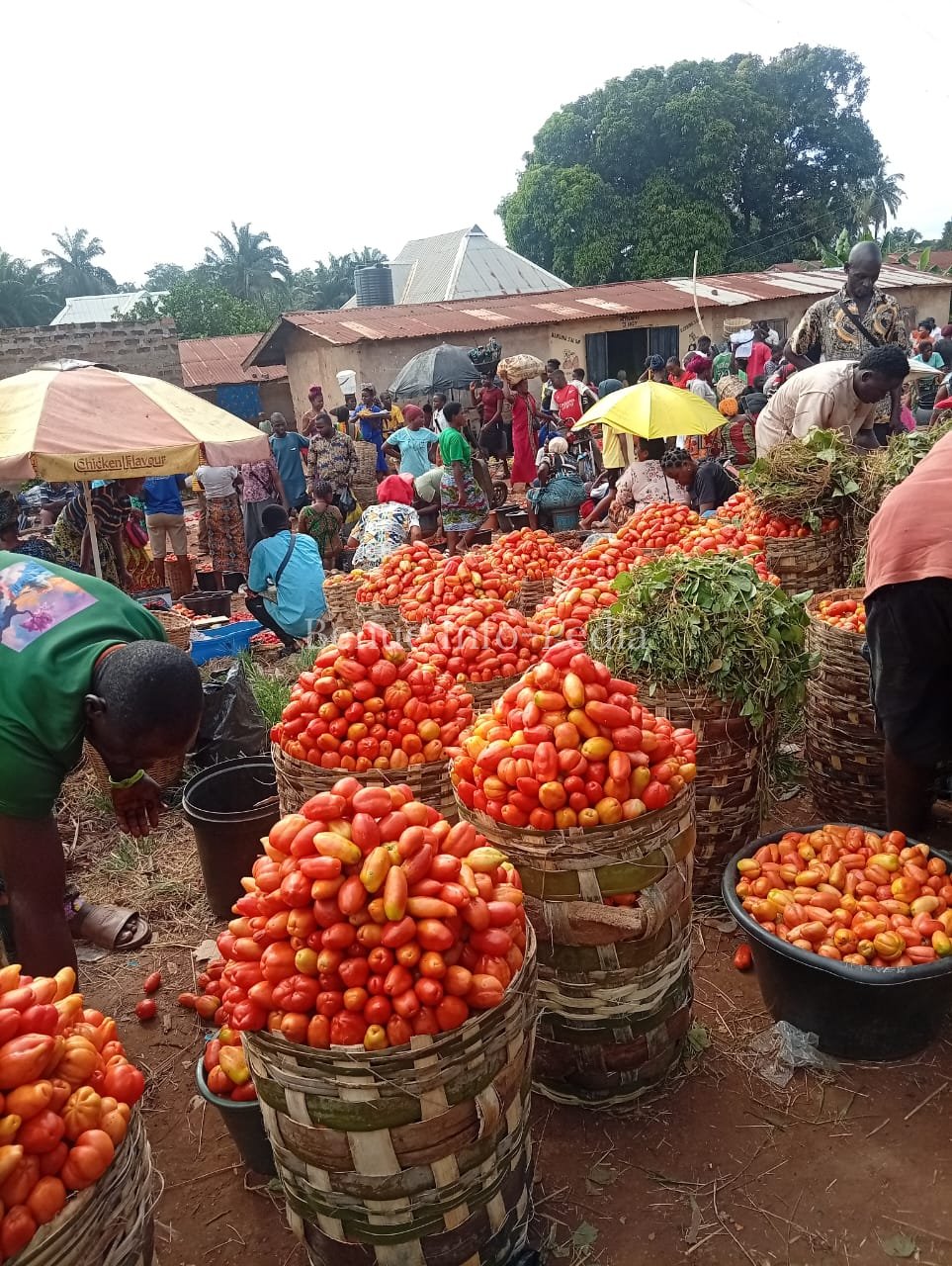
During the visit, traders were observed operating mainly along the George Akume Road axis and in open areas within and around the market. Benue Info-pedia observed approximately 21 active traders during the visit, alongside customers buying commodities.
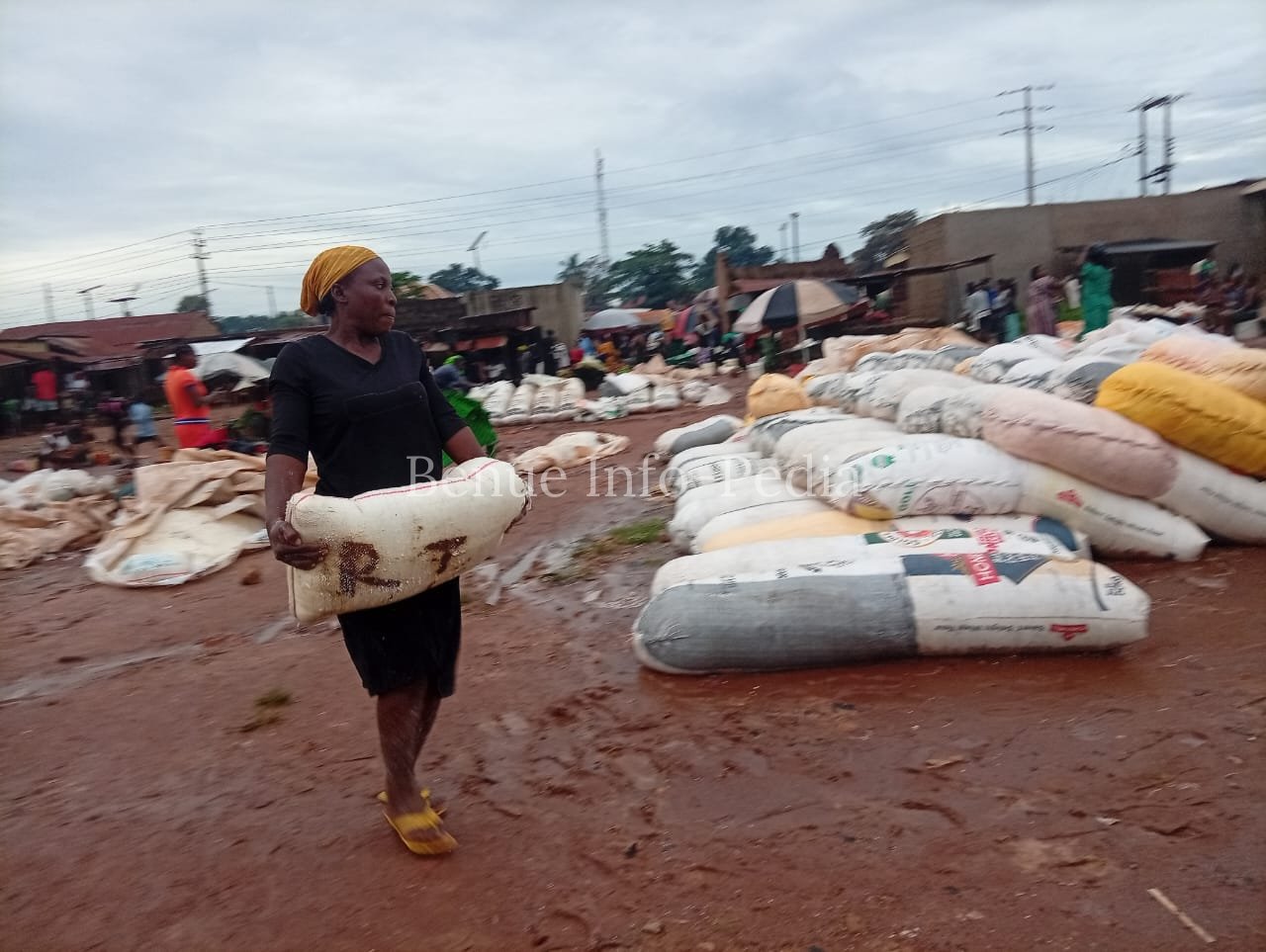
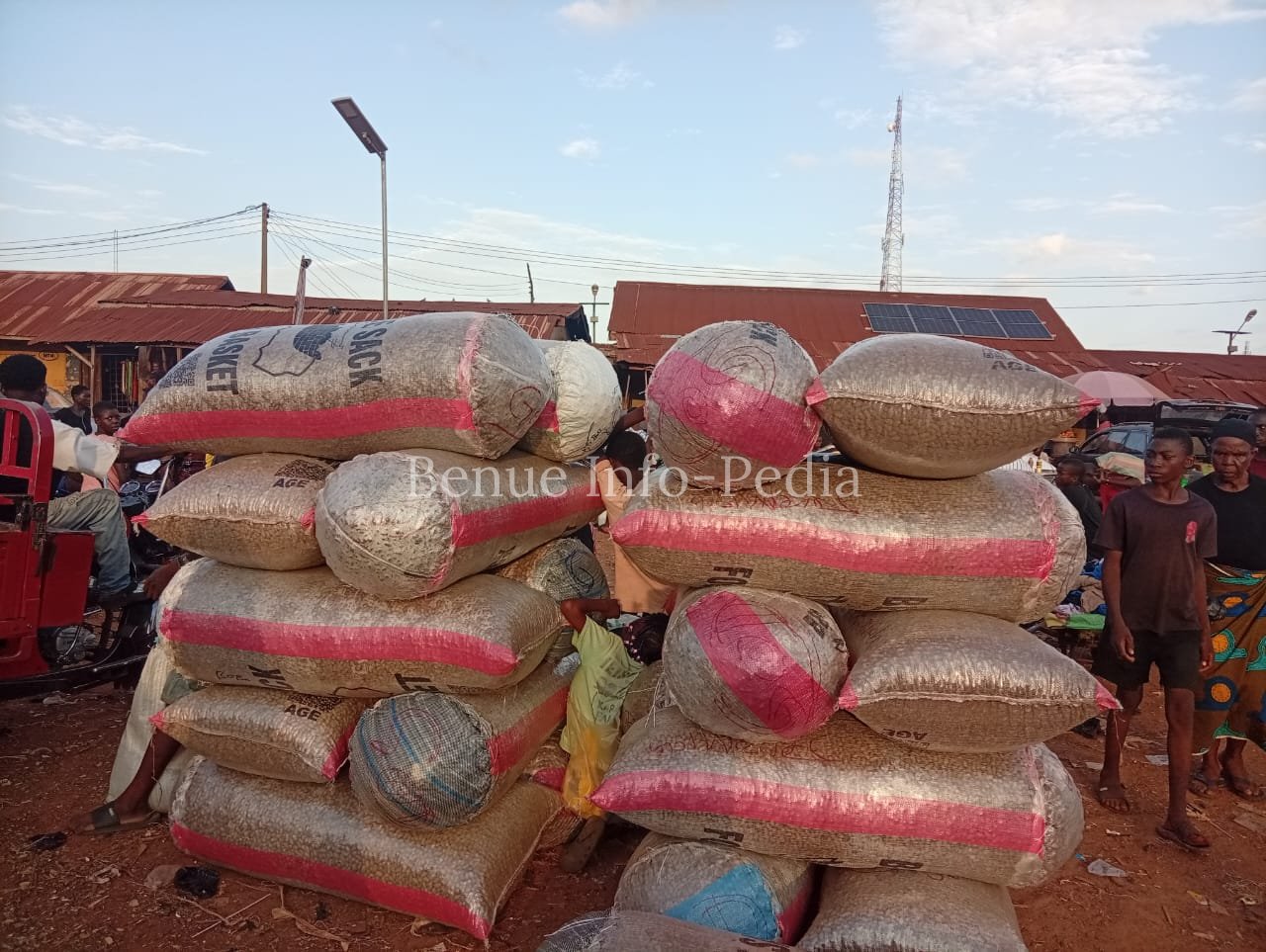
The goods observed included staple foods, Benue agricultural commodities, fresh food and cooking or processed essentials. Agricultural produce was available, while both retail and wholesale activities were observed.
A truck was also seen offloading sacks to shops within the market, with a woman recording the goods being delivered. Benue Info-pedia also encountered a wholesaler dealing in Benue bags.
However, the formal shop structure presented a different picture.
Many of the shops observed were occupied by internally displaced persons from Yelewata, rather than operating as conventional trader shops. Some activities were also taking place within the occupied spaces, including the sale of provisions and tailoring.
Traders, meanwhile, were operating outside the formal shop spaces, including along the George Akume Road axis and in an open area towards the exit gate.
The field observation found the market relatively busy, with roads accessible and security personnel present at the gate. No significant drainage problem was observed, although papers, leather and plastic waste were visible within the market compound.
Commodity prices
Prices recorded from traders included garri at ₦1,400–₦1,500 per rubber custard, rice at ₦5,000–₦6,000, beans at ₦5,000–₦6,000, maize at ₦1,800, soybeans at ₦4,500 and beniseed at ₦7,500.
Groundnut was reported at ₦6,000–₦7,000 per rubber custard, while egusi was ₦9,500. Three tubers of yam sold for between ₦2,000 and ₦3,500.
Other recorded prices included eggs at ₦6,000–₦7,500 per crate, palm oil at ₦1,800 per 75cl, groundnut oil at ₦2,000 per 75cl, cassava flakes at about ₦2,400–₦3,000 per rubber custard and Guinea corn at ₦3,000–₦3,500.
These figures are trader-reported prices observed during the visit and should not be interpreted as standardised market-wide prices. Quantities and prices may vary by trader, quality and product.
Traders report changing prices and purchasing patterns
Two traders interviewed by Benue Info-pedia identified maize, cassava flakes, Guinea corn, beans and rice among the commodities currently selling relatively quickly.
Traders also reported recent increases in the prices of Guinea corn, soybeans, rice and beans.
One trader gave previous prices of ₦2,400 for Guinea corn, ₦3,600 for soybeans, ₦4,800 for rice and ₦4,800 for beans. The trader attributed the increases partly to poor or limited farm production and resulting scarcity.
Another trader specifically identified Guinea corn as having become more expensive, reporting a previous price of ₦2,000. The trader attributed the increase to limited supply, saying new Guinea corn would not be available until December.
Both traders said customers were buying smaller quantities than before, which they attributed to reduced purchasing power.
Capital remains a challenge
A trader who has been operating at the market since its commissioning said trading activity has increased and that more people are interested in trading there.
However, the trader identified lack of funding as a major barrier to expansion.
According to the trader, she initially borrowed ₦3,000 to start trading but would now require at least ₦100,000 to operate or expand at a meaningful level.
The trader said she would like to expand but has been unable to do so because of limited capital.
The traders also expressed hope that the market would become more accessible to them if the displaced residents currently occupying formal shop spaces eventually return to their ancestral communities.
Benue Info-pedia's October 6 observation provides a baseline for further monitoring rather than a final assessment of the market.
The Market Watch series will continue tracking International Market Makurdi, including commodity prices, availability, trader activity, customer behaviour and changes in the use of formal and informal trading spaces.
Market Watch ID: MW-INT-2026-10-06
Comments
Join the Discussion
No comments yet. Be the first to share your thoughts!
Sign in to join the conversation.